Core HR Agent
HR Analytics: A Complete Guide to Data-Driven Workforce Decisions
- 28 October, 2026
- 20 Minutes
 Jamie Ho
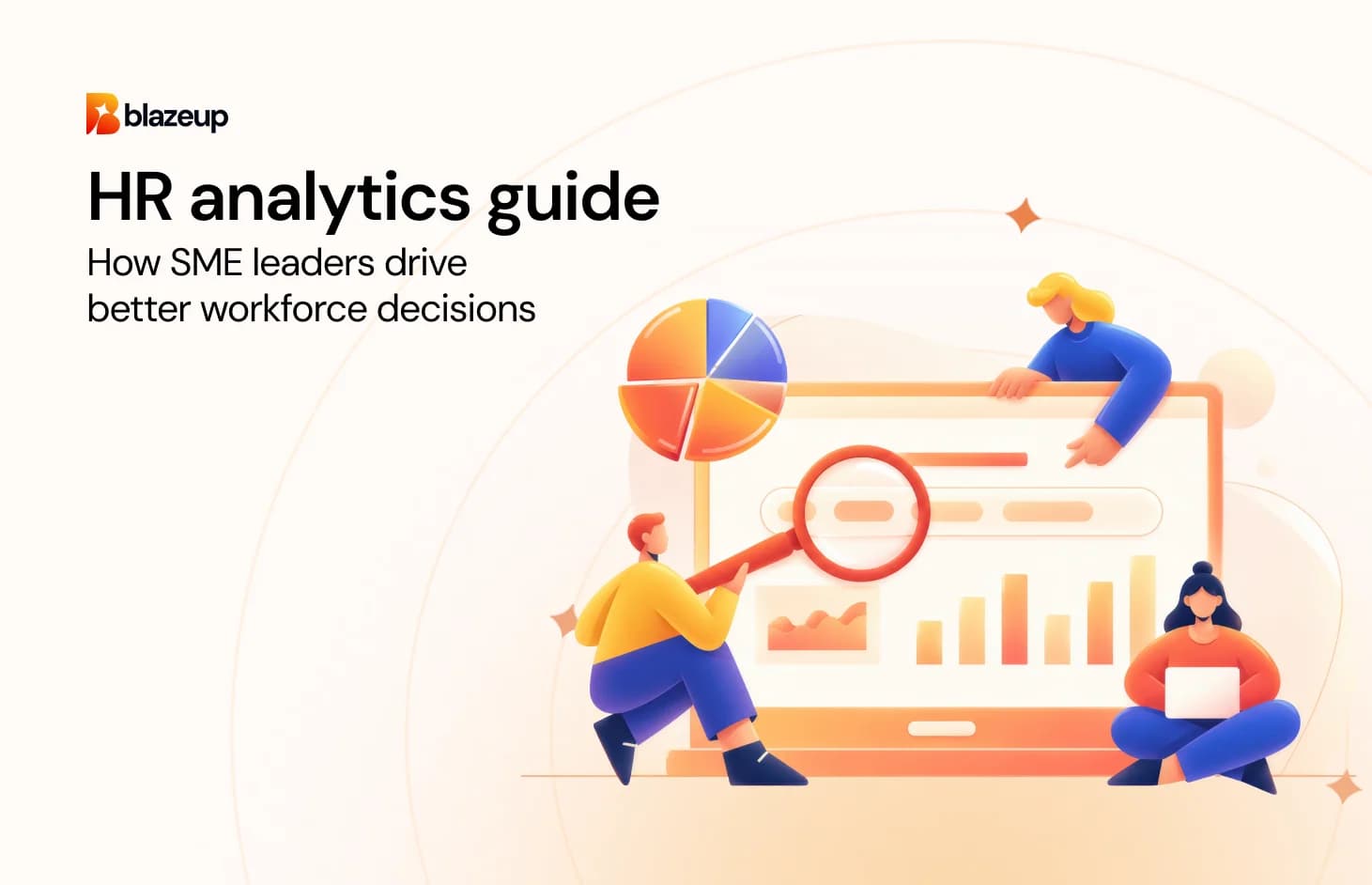
Table of Content
The gap between high-performing companies and struggling enterprises is not about budget — it is about data.
Organizations that make talent decisions using clear workforce metrics are more profitable than competitors that rely on gut feeling. Operating on manual spreadsheets and delayed reports leaves leaders constantly reacting to problems after the damage is done.
HR data analytics turns everyday employee details into practical business decisions. Instead of just tracking basic numbers, this approach helps managers understand why performance changes and what steps to take next.
For HR managers drowning in disconnected data from multiple operational systems with no clear workforce visibility, this guide offers a practical path forward. The framework shows how to navigate basic workforce metrics easily and turn raw staff records into clear operational insights.
This article provides a complete roadmap to master workforce analytics. Readers will gain a clear definition of HR analytics and explore 4 essential types of data analysis. The article also provides a practical roadmap to build internal analytics capabilities without hiring a dedicated data science team.
Key takeaways
- HR analytics turns data into decisions by helping HR teams understand workforce trends, identify underlying causes, and make informed business decisions.
- The 4 types of HR analytics explain what happened, why it happened, what may happen next, and what actions to take.
- Existing HR systems provide a starting point through data from recruitment, payroll, employee engagement, and performance management.
- Connected data reveals deeper insights by helping HR teams identify patterns that individual reports may miss.
- Measuring workforce trends supports better decisions by helping HR teams identify retention risks, address talent gaps, and improve workforce planning.
What Is HR Analytics?
At its core, HR analytics is the process of connecting workforce information directly to overall business performance. Every daily action – from scheduling store shifts to investing in staff training – leaves behind valuable workplace records that reveal how recruitment, retention, and training impact key enterprise outcomes like sales growth and operational productivity.
Business leaders must distinguish HR analytics from traditional HR reporting to leverage this strategic capability effectively. Static reports simply document past workforce events, whereas dynamic analytics extracts data patterns to inform future talent strategies.
Strategic HR analytics tools help answer 3 critical operational questions that standard reports miss:
- What is happening across our workforce right now?
- Why is it happening, identifying the root causes behind employee behavior?
- What actions should management take next to improve performance?
For example: A hotel chain might notice high employee turnover in specific locations through basic monthly exit logs. Combining guest feedback scores with operational HR data helps regional directors identify poor site management and targeted training gaps, fixing operational issues before guest satisfaction declines.
The 4 Types of HR Analytics
Business leaders usually adopt HR analytics as a progressive operational journey rather than an overnight transformation across their organizations. Transitioning step-by-step from basic historical record-keeping to predictive analytics platforms enables management to eliminate intuitive guesswork and proactively mitigate workforce risks.
Below are the 4 types of HR analytics that help leadership transform raw operational metrics into targeted business strategies.
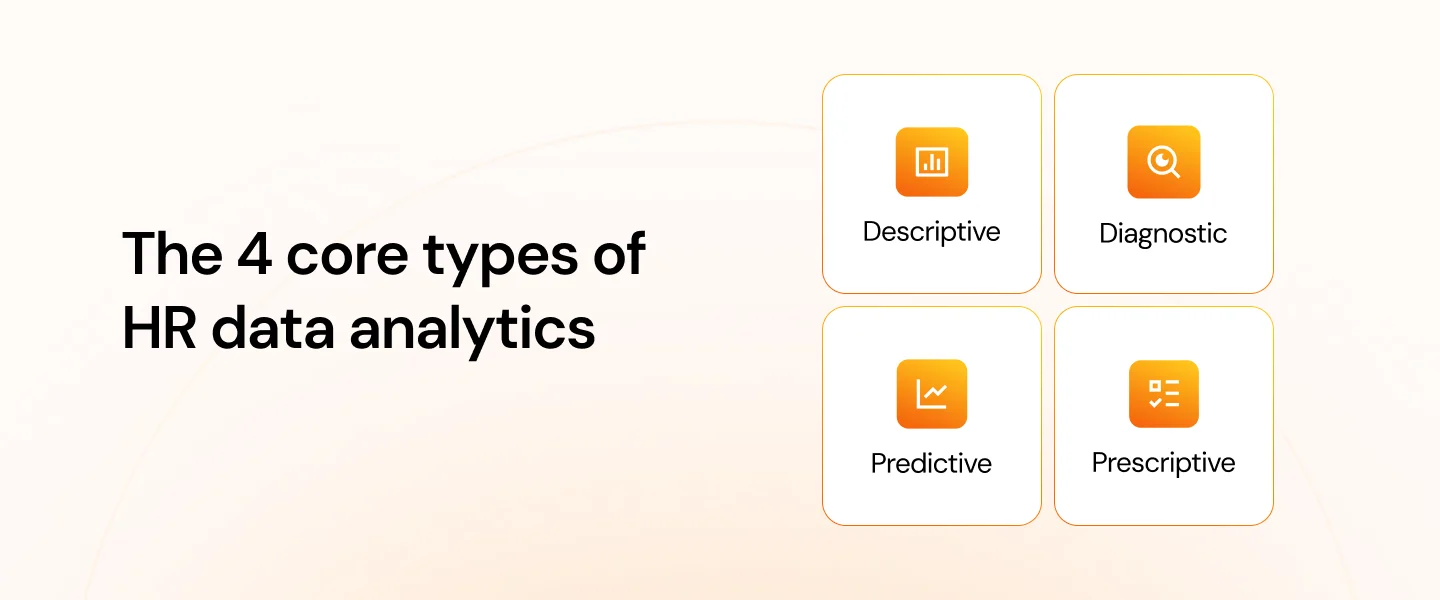
1. Descriptive analytics
Descriptive analytics serves as the foundational stage of workforce management, gathering historical records to explain past organizational events across store and factory operations. Before executing strategic operational changes, business leaders deploy these baseline dashboards to establish an objective performance benchmark.
Growing enterprises track baseline metrics such as headcount shifts, annual turnover rates, and daily attendance records to maintain complete operational visibility across departmental branches. Tracking these fundamental figures ensures executive teams maintain an accurate historical record of overall personnel activity.
For example: A retail store manager can review monthly attendance logs to confirm high absence rate during peak holiday sales. This basic tracking provides a clear summary of past events across different store locations without explaining the reasons behind them.
2. Diagnostic analytics
Diagnostic analytics examines interconnected workplace records to uncover the root causes of specific organizational behaviors and performance drops. Analysis beyond surface-level numbers enables managers to cross-reference exit feedback with daily shift logs, resolving systemic issues like flawed shift planning or supervisor communication gaps.
Investigation of root causes helps operations managers resolve tangible workflow disruptions across the factory floor. Research into underlying drivers gives leadership the necessary context to address real issues affecting daily operations.
Integrated evaluation of different workplace records explains what caused specific team behaviors and performance drops. Combination of exit feedback, shift logs, and attendance records allows managers to spot internal issues such as poor shift organization, inadequate equipment setup, or weak supervisor communication.
For example: By combining exit interview feedback with employee shift records, a manufacturing plant director can uncover the real reason behind sudden turnover spikes in an assembly line. This analysis reveals whether staff departures stem from poor shift organization, inadequate safety equipment, or supervisor management gaps.
3. Predictive analytics
Predictive analytics applies statistical models and historical workforce data to project future workplace trends and talent risks. Forward-looking forecasting enables management to anticipate operational friction and workforce gaps before labor shortages disrupt business operations.
Data models cross-reference historical retention patterns with peak operational schedules to highlight emerging workforce risks. Strategic forecasting allows department heads to adjust staffing plans, streamline hiring pipelines, and optimize workload distribution proactively.
For example: A nationwide logistics operator uses predictive models to evaluate historical worker retention alongside peak delivery schedules. The system flags specific warehouse facilities facing high attrition risks over the coming quarter, allowing managers to adjust staffing plans before labor shortages disrupt operations.
4. Prescriptive analytics
Prescriptive analytics represents the ultimate phase of workforce analytical maturity, translating complex employee data into automated, actionable guidance for operational leaders. Dynamic analytical systems help executives determine optimal corrective measures across regional facilities before workplace disruptions impact bottom-line performance.
Direct connection between system findings and automated workflow triggers streamlines daily management decisions for operations directors. Immediate interventions such as automated retention bonuses or targeted leadership coaching enable management to resolve high-risk operational challenges without relying on intuitive guesswork.
For example: When system alerts show high supervisor complaint records in a regional fulfillment center, management receives automated recommendations to implement immediate leadership coaching. Taking proactive steps before issues escalate protects staff morale and reduces turnover risk among top-performing workers.
Key HR Data Sources: What Feeds the Analytics Function
Key HR data sources represent the primary information streams that supply an analytics engine with actionable workforce inputs. Unifying operational records across isolated software platforms enables leadership to uncover hidden organizational patterns that individual tools cannot reveal.
Business leaders unify different information streams to construct an effective decision-making framework. Bringing operational inputs into a central space allows leaders to discover patterns that remain hidden when information stays trapped inside individual tools.
The image below illustrates the 4 core HR data sources feeding an analytics engine. Centralizing these inputs enables leadership to transform raw operational records into actionable workforce insights.
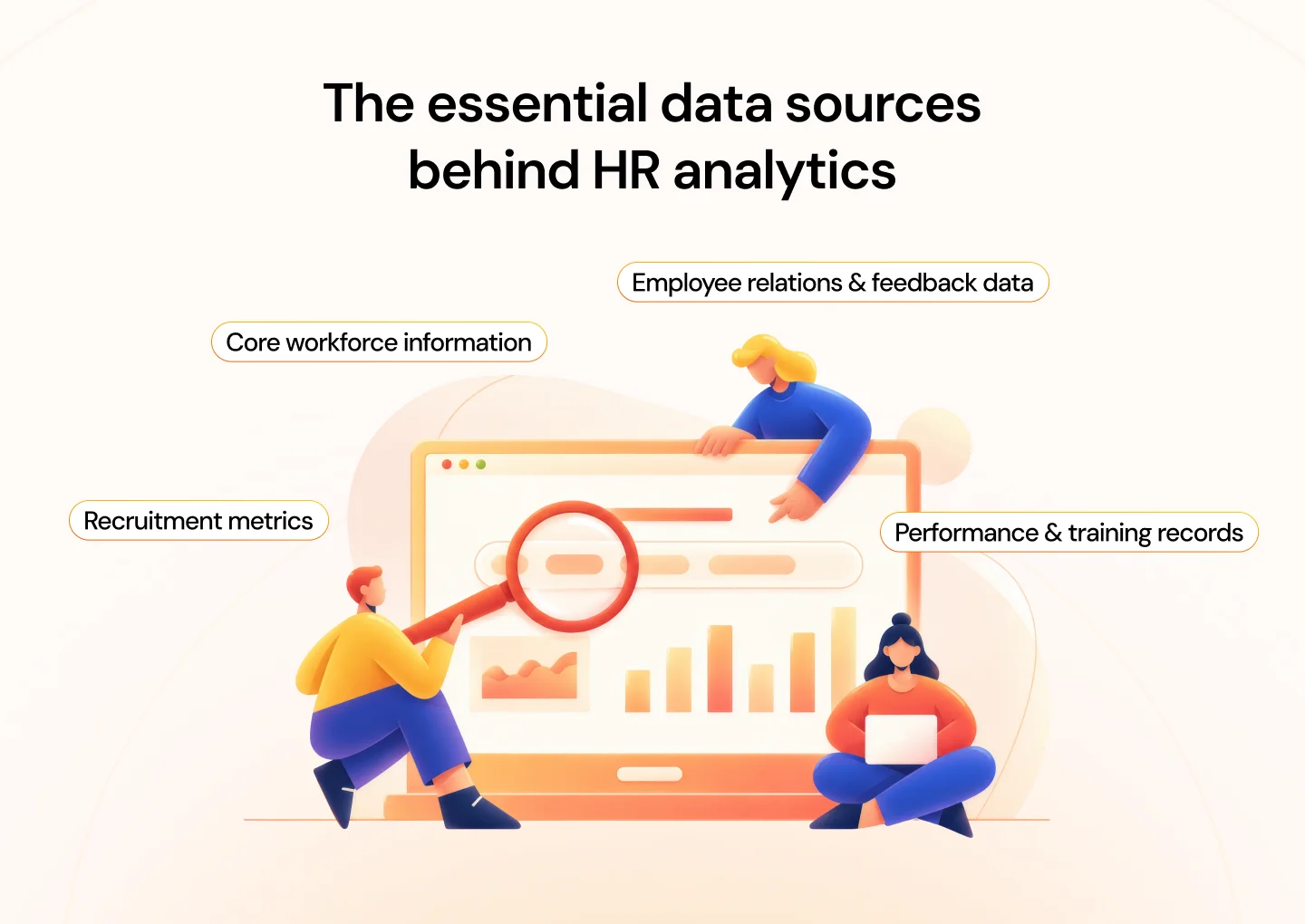
1. Core workforce information
Core workforce information encompasses fundamental employee profile data that forms the baseline for administrative HR management. Tracking demographics, job levels, and tenure alongside payroll systems helps managers analyze headcount shifts and evaluate compensation trends across regional branches.
Basic employee profile records form the foundation of everyday HR management. Tracking basic details like age, tenure, location, and job level helps managers understand who works for the company and how teams are structured across different branches.
Connecting employee location and employee duration details with payroll records lets managers spot clear compensation trends across teams. Modern HR analytics tools organize these basic figures into simple dashboards, making it easy to track seasonal headcount changes.
For example: A regional retail chain reviews tenure and location records across store branches to track long-term staffing levels. Seeing how worker tenure varies between downtown and suburban locations helps regional managers plan seasonal recruitment earlier.
2. Employee relations and feedback data
Employee relations and feedback data provides direct visibility into daily staff satisfaction through aggregated workplace complaints, safety reports, and survey results. Systematic monitoring of these everyday records helps management detect workplace friction before operational productivity declines.
Cross-analysis of complaint logs and staff survey scores assists department heads in resolving team issues efficiently. HR systems measure resolution speed across facilities, highlighting which operational units require immediate support from senior leadership.
For example: A manufacturing facility reviews unresolved safety complaints alongside quarterly survey scores across assembly lines. Seeing high complaint numbers in one specific building alerts floor directors to review local management practices immediately.
3. Recruitment metrics
Recruitment metrics quantify candidate acquisition pipelines by measuring application volume, hiring expenses, and overall hiring velocity. Complete visibility into sourcing channels enables recruitment teams to evaluate pipeline efficiency effectively.
Comparison between candidate sourcing channels and early turnover rates highlights which pipelines yield long-term, reliable employees. Talent acquisition teams utilize these practical insights to reallocate recruiting budgets toward high-yield channels.
For example: A growing logistics firm checking applicant sources against 6 months driver retention figures. Discovering that employee referrals yield longer-tenured warehouse staff encourages the hiring team to expand internal referral bonuses.
4. Performance and training records
Performance and training records track employee skill development over time by linking evaluation scores with course completion rates. Alignment between peer feedback and skill training logs demonstrates how effectively internal development programs support core business needs.
Direct correlation between training completion figures and performance ratings reveals whether learning programs enhance actual work quality. Department heads utilize these clear metrics to design targeted career development plans for top-performing employees.
For example: A nationwide retail chain compares customer service training completion rates against quarterly store sales performance. Store locations with fully trained customer service teams consistently achieve higher customer satisfaction scores.
5 Key Applications of HR Analytics for Modern Businesses
Managers apply HR analytics to solve specific operational problems when collecting workforce data only creates real value. Moving from basic reporting to targeted use cases helps leadership tackle daily workforce challenges with measurable business outcomes.
1. Attrition prediction
Early warning systems enable organizations to retain top talent far more effectively than traditional exit interviews. Subtle pattern changes across daily operational metrics alert managers to support valuable team members before outside opportunities arise.
Modern HR analytics tools analyze pulse survey feedback, shift patterns, and engagement metrics to calculate individual departure risks. Automated alerts allow department heads to introduce flexible schedules and targeted benefits before key talent resigns.
For example: NVIDIA leverages continuous sentiment tracking and employee feedback loops within its workforce framework, as highlighted in their Fiscal Year 2026 Sustainability Report. By translating employee pulse data into targeted retention actions, their global turnover rate dropped to just 3.7%, compared with the technology industry average of 21.9%.
2. Recruitment optimization
Comprehensive evaluation of sourcing channels ensures talent acquisition budgets deliver maximum hiring quality. Clear alignment between application channels and long-term performance allows recruitment leaders to focus resources on top-performing pipelines.
Integrated tracking of ATS metrics alongside quarterly performance scores highlights which sourcing channels produce hires with the highest retention rates and lowest cost-per-hire. Talent teams use these practical insights to refine job descriptions and adjust candidate selection criteria.
For example: Schneider Electric optimizes talent acquisition using AI-driven profile matching and skills assessment data. Recruitment teams prioritize high-matching candidate profiles suggested by algorithms based on job requirements. Human recruiters conduct all candidate interviews and retain sole authority over final hiring decisions.
3. Performance management
Regular review of rating distributions across teams prevents evaluation bias and keeps productivity standards consistent. Early identification of skewed scoring patterns helps leadership ensure clear performance expectations across all regional branches.
Score distribution charts reveal hidden calibration issues, such as managers overusing top ratings to avoid uncomfortable feedback conversations. HR teams use workforce analytics to train supervisors on fair scoring guidelines, ensuring bonuses reflect real workplace contributions.
For example: MacLean-Fogg uses employee survey data to identify workforce concerns and inform talent reviews, succession planning, and retention efforts. According to Quantum Workplace’s case study, the company’s employee turnover rate fell by 15.5 percentage points between 2024 and 2026 YTD.
4. L&D effectiveness
Direct measurement of post-training performance ensures employee development budgets generate measurable business returns. Systematic evaluation of skill growth metrics allows managers to fund learning programs that directly improve daily productivity.
Comparison between pre-training output and post-course completion rates demonstrates the exact ROI of internal learning investments. Department heads track these skill acquisition figures to update training modules and retire ineffective learning content.
For example: POSCO evaluates employee training effectiveness using course completion rates, participation data, and certification results. In 2025, its learning platform recorded 172,462 learning instances and a 79% course completion rate, helping the company track training engagement and skill development.
5. Diversity and Inclusion
Detailed analysis of workplace equity patterns helps leadership build fair career advancement paths across every level of the company. Continuous monitoring of promotion rates and compensation ranges highlights structural barriers that impede balanced talent growth.
Demographic distribution metrics across job levels reveal pay equity gaps and hiring biases that impact team retention. Executives use comprehensive HR data analytics to refine promotion criteria and establish transparent internal hiring practices.
For example: Deloitte Denmark tracks promotion pipeline data and analyzes performance ratings to identify potential gender bias in talent reviews. The firm also reviews adjusted pay gaps and monitors promotion metrics to guide its efforts toward fairer compensation and career advancement.
Top HR Analytics Tools: Buyer's Map by Category
Enterprise decision-makers select appropriate analytics platforms by evaluating organizational complexity, available technical resources, and immediate business priorities. Procurement teams assess systems across integration breadth, predictive capabilities, dashboard flexibility, regulatory compliance, and scalability to ensure the chosen solution evolves alongside company growth.
1. Enterprise-grade analytics engines
Dedicated enterprise platforms deliver deep predictive capabilities and workforce planning features for large organizations. These high-capacity systems offer advanced benchmarking, retention forecasting, and natural language processing to analyze open-ended employee feedback.
Connecting complex data streams across global offices uncovers hidden organizational trends. Large enterprises rely on these sophisticated tools to model long-term headcount needs and manage high-volume talent pipelines effectively.
2. Business intelligence and visualization suites
General business intelligence applications offer powerful visual customization for analytics teams seeking tailored reporting dashboards. These flexible suites integrate separate operational databases into clear visual layouts, processing massive datasets with dynamic filters across departments, tenure, and regional sites.
Data specialists utilize these adaptable visualization platforms to blend workforce metrics directly with commercial financial data. Organizations with internal data talent choose these flexible systems to create custom visual reports without purchasing specialized software module
3. Native HRIS analytics modules
Integrated human resource platforms offer convenient, built-in analytics right where daily personnel administration occurs. These all-in-one systems link payroll records directly with headcount metrics, unify administrative workflows, and combine core employee records with engagement tracking.
Using native reporting modules eliminates the need to export sensitive workforce records into external reporting software. Mid-sized companies value these unified platforms for keeping operational tracking and personnel management inside a single software environment.
4. Lightweight SME analytics solutions
Streamlined analytics platforms provide essential reporting tools without the steep learning curve of complex enterprise software. These accessible solutions combine payroll tracking with basic performance metrics, centralized headcount dashboards, and compliance monitoring for growing teams.
Growing businesses deploy these intuitive tools to monitor turnover, absenteeism, and payroll expenses without hiring dedicated data scientists. Small HR teams use these accessible systems to automate routine reporting and maintain clear operational visibility over core personnel metrics.
5. Unified HR and operations platforms
Unified operations platforms bridge the gap between human resources, finance, and daily operational workflows for growing businesses. These modern solutions deliver built-in reporting that consolidates workforce metrics, payroll figures, and operational inputs into a single central environment.
Management teams connect daily staff records directly with operational performance to make data-backed choices without complex software integration projects. Small and mid-sized companies choose this practical approach to eliminate manual spreadsheets and establish clear workforce visibility effortlessly.
Explore BlazeUp to see how it automates cross-system data integration with digital workers, enabling HR teams to replace manual spreadsheets with real-time operational insights.
How to Build an HR Analytics Function: 4 Steps for SMEs
Small and mid-sized enterprises introduce analytics capabilities through a structured, step-by-step roadmap when operating without dedicated data science teams. HR strategists select two to five high-impact KPIs per business goal to maintain executive focus, respecting cognitive limits while establishing a clear transition from basic reporting to advanced forecasting.
The 4 stage maturity model visualizes how organizations evolve from static reporting to predictive intelligence. Corporate planners evaluate these distinct phases to diagnose current analytical strengths and set targeted growth benchmarks.
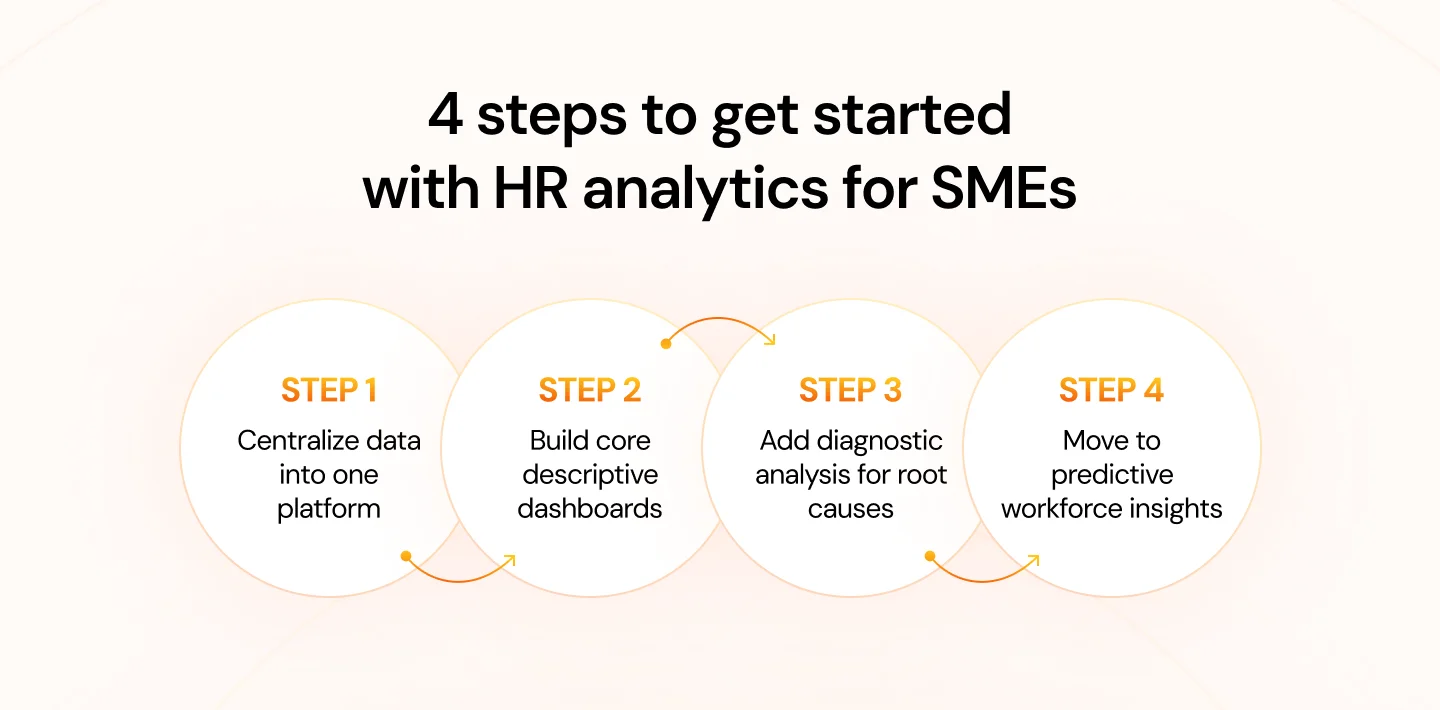
Step 1: Centralize data into one platform
Start with consolidating scattered employee records, which represents the primary obstacle before producing meaningful operational insights. Connecting payroll platforms, applicant tracking software, and survey records into a single environment creates a reliable data foundation for future reporting.
Enterprise teams eliminate manual spreadsheet updates and reduce entry errors by integrating disparate operational software. Establishing a clean data foundation enables HR personnel to review accurate workforce profiles without spending hours compiling weekly status logs.
Step 2: Build core descriptive dashboards
Analytics leads demonstrate early program value by constructing intuitive dashboards around core metrics that executive management already monitors. Presenting key indicators such as headcount fluctuations, quarterly turnover rates, and average time-to-hire validates the credibility of underlying operational records.
Operational teams master these foundational metrics to build organizational trust before introducing complex predictive models. People-operations managers utilize baseline dashboards to institute consistent reporting habits and maintain accurate personnel figures over time.
Step 3: Add diagnostic analysis for root causes
Department heads investigate the underlying drivers behind workplace trends once descriptive reporting earns executive confidence. Cross-referencing exit interview feedback with manager performance records reveals whether high team turnover stems from compensation gaps or leadership friction.
Operations managers analyze interconnected data points to pinpoint systemic process flaws across regional facilities. Functional leads deploy these diagnostic findings to refine internal policies, enhancing employee experience before performance issues escalate.
Step 4: Move to predictive workforce insights
Forward-thinking planners forecast labor risks and future hiring requirements after establishing fully dependable diagnostic frameworks. Implementing modern analytics platforms allows growing companies to anticipate attrition risks and skill shortages before workforce gaps disrupt commercial operations.
Growth-oriented enterprises leverage predictive modeling features to shift from reactive firefighting to proactive workforce planning. Executive management relies on these forward-looking projections to optimize recruitment budgets, support vulnerable departments, and protect core commercial revenue.
Benefits and Challenges of HR Analytics
Corporate planners leverage an evidence-based approach to workforce management to secure substantial financial and operational advantages for growing businesses. Executive management evaluates potential operational hurdles to prepare realistic implementation strategies alongside structured risk mitigation plans.
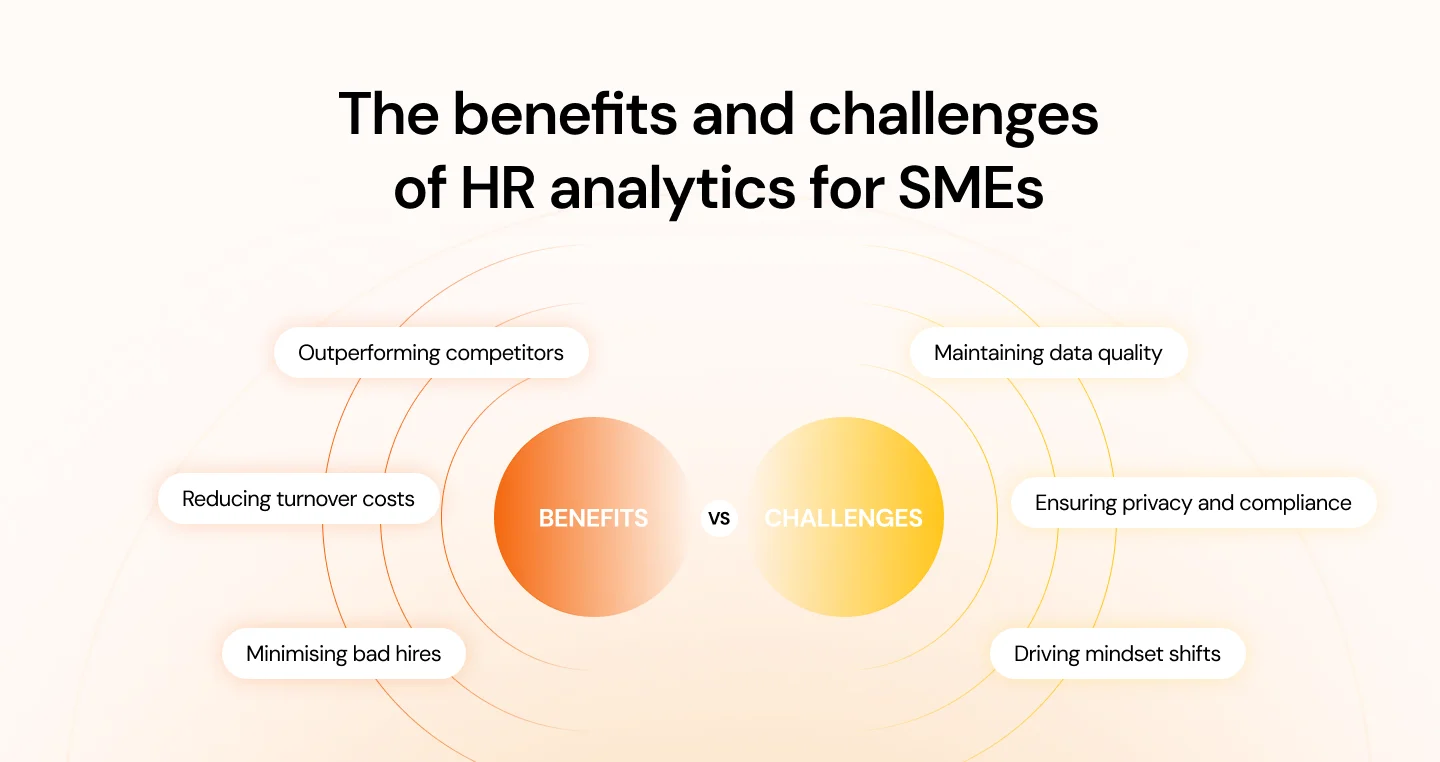
The image below illustrates the primary benefits and practical challenges of implementing HR analytics. Reviewing this visual summary prepares leadership to navigate core trade-offs before scaling internal analytics capabilities.
Key Benefits of HR Analytics
Decision-makers measure the financial and functional impact of data-driven choices to justify investments in modern analytics platforms. Analyzing these tangible returns ensures people-operations teams direct their resources toward high-value organizational initiatives.
- Outperforming competitors: Making workforce choices based on concrete evidence directly boosts operational efficiency and overall profitability. Relying on reliable employee insights helps organizations allocate resources effectively and outperform market peers.
- Reducing turnover costs: Uncovering early retention warning signs enables managers to support key talent before departures happen. Preventing unexpected resignations saves significant replacement expenses and protects daily operational continuity.
- Minimising bad hires: Data-driven screening methods improve hiring accuracy and streamline candidate evaluation over time. Avoiding recruitment mistakes prevents wasted onboarding effort, protects team morale, and reduces unnecessary salary overhead.
Critical Challenges to Overcome
Business leaders must navigate practical hurdles around systems, compliance, and workplace culture to build a sustainable analytics capability. Identifying these common constraints early allows organizations to manage risks proactively before rollout.
-
- Maintaining data quality: Disconnected software systems and missing employee records create inaccurate metrics. Analytics is only as strong as the underlying information, so fragmented data often leads executives toward flawed strategic choices.
- Ensuring privacy and compliance: Protecting sensitive employee records requires strict data governance protocols across every level of the organization. Companies must implement role-based access controls, robust encryption standards, and full compliance with global regulations like GDPR.
- Driving mindset shifts: Corporate executives drive cultural adoption to shift leadership mindsets from gut instinct to evidence-based decision-making. Transitioning to data-driven operations depends on building strong trust and active commitment across all management teams beyond HR.
Conclusion
HR analytics transforms the human resource function from a traditional cost center into a proactive strategic partner. Moving beyond basic administrative support gives leadership the evidence-based insights needed to make better, faster talent decisions that directly impact business growth.
The 4-stage analytical maturity model provides any HR team with a clear roadmap from basic reporting to advanced forecasting. Moving step-by-step from descriptive tracking to diagnostic, predictive, and prescriptive analysis allows organizations to build data capabilities at a manageable, effective pace.
For an HR manager still running workforce reports manually in spreadsheets, the primary objective is not purchasing expensive enterprise software. The immediate priority is connecting existing software systems so all operational employee records reside within one central environment.
Ready to unify your HR data?
Explore BlazeUp to centralise your operational, payroll, and people management data into a single platform and transform complex analytics into clear business strategies today.