Core HR Agent
AI in Employee Engagement: How It Works & 5 Practical Applications
- 30 October, 2026
- 20 Minutes
 Jamie Ho
Table of Content
The most dangerous workplace disconnect rarely shows up in formal resignation meetings. Silent dissatisfaction erodes team momentum long before managers notice dropping productivity across daily workflows.
Conventional HR departments continue to fight this silent exit with outdated annual surveys, generic wellness perks, and infrequent town halls that miss everyday employee sentiment. Static feedback tools merely record employee frustration after operational damage has already occurred.
For an HR manager balancing recruitment, regulatory compliance, staff development, and routine request routing, freeing people-operations leaders to lead the crucial face-to-face conversations that drive real retention.
In this article, organizational leaders will explore how modern employee experience technology operates across daily workflows and discover 5 core workforce applications that transform traditional HR operations. Readers will gain actionable insights to resolve administrative friction, strengthen team morale, and scale meaningful employee support effectively.
Key takeaways
- AI improves employee engagement by providing personalized support, answering HR questions, and reducing repetitive tasks.
- AI helps HR improve retention by analyzing employee feedback, identifying disengagement risks, and addressing workforce concerns early.
- 5 core AI applications include predictive analytics, automated HR assistant, tailored learning paths, and automated pulse surveys.
- Successful AI adoption requires employee trust built through clear communication, practical training, and ongoing support.
- Human oversight remains essential to protect employee privacy, prevent unfair decisions, and preserve meaningful workplace relationships.
What Is AI in Employee Engagement?
AI in employee engagement represents a comprehensive approach that enables staff members to perform their roles effectively while supporting HR teams in managing talent operations with heightened precision. Modern artificial intelligence platforms extend far beyond basic administrative automation or simple chatbots, supporting the full employee experience across every workplace touchpoint.
The core difference between traditional retention and AI-driven engagement lies in shifting from reactive fixes to proactive support. Traditional employee engagement efforts often rely on periodic surveys and exit interviews to identify workplace concerns after they arise. AI-driven engagement uses employee feedback and engagement patterns to help HR teams identify concerns earlier and provide timely support.
While employee engagement refers to employees’ motivation and connection to their organization, AI in employee experience technology refers to the tools that support employees throughout their journey, from onboarding to professional development.
Why Traditional Employee Engagement Fails
Conventional engagement strategies struggle to keep pace with modern workplace expectations, leaving organizations vulnerable to unaddressed turnover risks. Large operational teams, fragmented internal tools, and complex daily workflows make personalized workforce support virtually impossible to scale without automated intelligence.
Modern employees expect operational leaders to anticipate daily needs, personalize professional development, and streamline workflows across all enterprise departments. Deploying tailored intelligence platforms allows management to meet these high expectations without overwhelming administrative resources.
Artificial intelligence directly addresses 3 structural failures that cause traditional employee engagement programs to falter below

1. Slow annual surveys
Traditional survey models create a critical lag between emerging workplace issues and management intervention across enterprise operations. Relying on static feedback mechanisms leaves business leaders blind to real-time morale shifts until operational turnover risks escalate.
Automated platforms solve this operational delay by replacing annual questionnaires with continuous sentiment analysis. Deploying AI for employee engagement enables HR teams to capture real-time workforce feedback automatically, while modern employee engagement AI analytics surfaces critical sentiment patterns before morale drops.
For example: Shift supervisors at a regional logistics enterprise track automated sentiment metrics across daily warehouse operations. Real-time alerts notify department directors about declining morale in specific packing teams, allowing operational leads to resolve scheduling conflicts long before staff turnover increases.
2. One-size-fits-all programs
One-size-fits-all engagement programs rarely drive long-term workforce commitment. Generic wellness initiatives create temporary enthusiasm without addressing the specific drivers that motivate individual employees.
Enterprise leaders solve this lack of personalization by leveraging modern retention technology across daily management workflows. Integrating AI in employee experience strategies helps operational managers evaluate daily interaction patterns, while AI and employee engagement tools deliver personalized development opportunities that sustain long-term commitment.
For example: Department heads at a multi-location retail chain utilize internal intelligent platforms to track individual career preferences alongside daily performance. Store managers deliver targeted skill-upgrading modules to cashier leads based on personal growth goals, increasing staff retention without inflating broad training budgets.
3. Missing early warning systems
Manual observation rarely detects subtle dissatisfaction before valuable team members choose to leave. Most corporate supervisors discover underlying employee frustration only after key staff members submit formal resignation letters.
Automated monitoring platforms eliminate this blind spot by tracking continuous behavioral patterns across daily operational channels. Applying AI in employee experience analytics alongside employee experience technology helps managers detect early shifts in absenteeism and productivity, enabling leaders to step in months before resignations occur.
For example: Plant directors at a manufacturing facility rely on predictive analytics to monitor daily shifts in overtime requests and team communication patterns. System alerts highlight early burnout risks within specific assembly line groups, allowing site directors to restructure work hours long before operational delays impact factory production goals.
5 AI Applications for Employee Engagement
Modern enterprises leverage targeted artificial intelligence technologies to automate administrative workflows while elevating workforce motivation across all operational levels. Integrating intelligent applications allows executive leaders to transform traditional, reactive retention tactics into proactive talent management strategies.
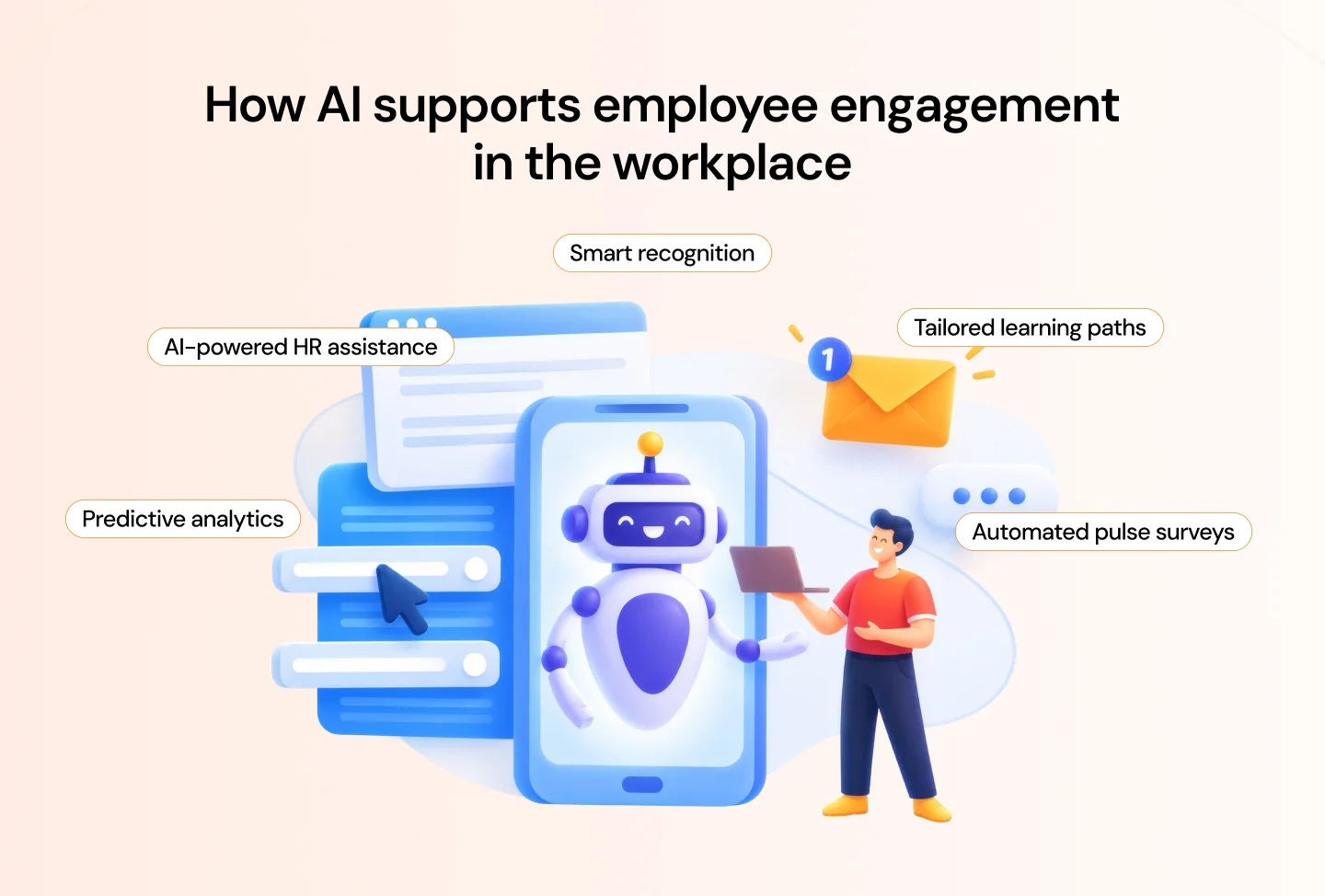
The visual below outlines the primary functional areas where artificial intelligence enhances daily workforce experiences.
1. Predictive analytics
Advanced machine learning algorithms process digital collaboration patterns and real-time communication metrics to generate automated disengagement alerts. Deploying AI for employee engagement models enables predictive risk scoring that replaces reactive annual evaluations with continuous morale monitoring.
Enterprise platforms that incorporate AI in employee experience frameworks provide leaders with proactive retention signals months before burnout impacts operational output. Traditional feedback tools fail to process continuous behavioral data, leaving department managers blind to emerging team fatigue.
For example: Shift coordinators at an international logistics enterprise use predictive analytics to evaluate voluntary overtime requests alongside shift attendance logs. Automated alerts highlight early fatigue patterns within night-shift teams, prompting supervisors to adjust workload distribution long before operational disruptions occur.
2. Automated HR Assistants
Intelligent natural language processing platforms automate policy routing and new hire inquiries across unified digital ecosystems. Leveraging employee experience technology solutions provides 24/7 automated resolution for routine benefit questions while accelerating overall time to full productivity.
Intelligent employee experience AI virtual assistants eliminate administrative ticket backlogs across regional branch locations. Legacy onboarding workflows force staff members into lengthy waiting periods for basic access approvals, creating operational friction that erodes early enthusiasm.
For example: Human resource leads in a nationwide retail chain integrate enterprise virtual assistants to handle daily policy questions and onboarding compliance automatically. Store associates receive immediate answers regarding paid time-off balances, eliminating administrative delays across regional store branches.
3. Smart recognition
Automated recognition engines track daily workflow achievements continuously to trigger instant appreciation metrics aligned with specific business targets. Integrating AI employee engagement tools ensures that high-performing team members receive targeted rewards the moment key milestones occur.
Modern platforms that align AI and employee engagement capabilities connect daily operational metrics directly with personalized digital appreciation channels. Standardized recognition programs deliver delayed rewards long after achievements take place, failing to build lasting intrinsic motivation across functional teams.
For example: General managers at a regional manufacturing facility use automated recognition software to celebrate shift safety milestones across assembly lines. Factory workers reaching quarterly safety goals receive personalized digital appreciation vouchers automatically, boosting team morale without inflating reward budgets.
4. Tailored learning paths
Machine learning recommendation engines evaluate individual performance metrics alongside corporate competency frameworks to construct customized development journeys. Advanced AI employee experience portals automatically recommend specialized skill certifications that match individual career aspirations with internal mobility needs.
Centralized learning platforms replace static corporate training catalogs with dynamic, data-driven career development pathways. Standardized training programs often fail to retain top talent because generic course offerings ignore specific worker skill gaps and long-term professional goals.
For example: Operations directors in a commercial transport enterprise utilize intelligent learning portals to map out career progression pathways for fleet mechanics. System recommendations connect senior technicians with specialized vehicle diagnostic certifications, accelerating internal promotions without increasing overall training overhead.
5. Automated pulse surveys
Intelligent feedback platforms distribute micro-surveys automatically and process open-ended text through natural language sentiment analysis. Deploying modern employee engagement AI solutions converts unstructured workforce responses into structured executive action plans in real time.
Automated survey engines eliminate manual questionnaire preparation, allowing leadership teams to track daily morale shifts continuously across global site locations. Traditional survey distribution requires extensive administrative processing, delaying data analysis and preventing timely executive decision-making.
For example: Regional directors in an international hotel group adopt automated feedback software to schedule weekly check-ins across global site locations. System dashboards analyze open-ended feedback across multiple languages, enabling branch managers to resolve operational bottlenecks immediately.
AI and Employee Experience Technology
Employee experience encompasses every interaction, observation, and emotion an individual encounters throughout their organizational tenure. Intelligent digital frameworks address this entire journey continuously, moving far beyond isolated tools to create a cohesive operational environment across all career stages.
The framework below visualizes the complete employee lifecycle across six distinct operational stages. Examining this continuous cycle helps HR leaders structure targeted digital touchpoints that enhance employee sentiment from recruitment to offboarding.
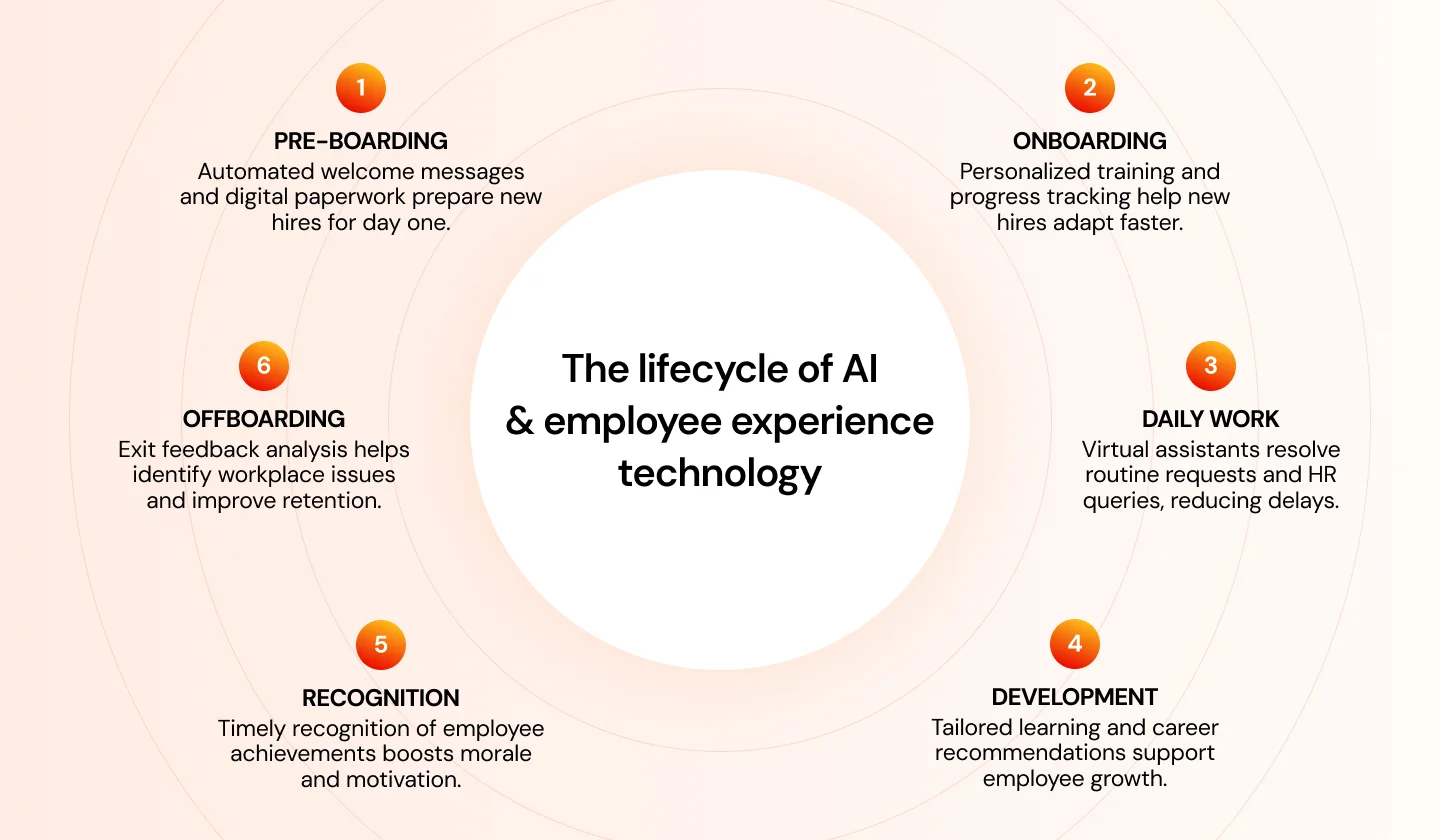
Modern technology systems support the full employee lifecycle through targeted automated capabilities:
- Pre-boarding: Automated portals send personalized welcome videos, collect tax forms digitally, and issue IT equipment access credentials before day one. An early administrative setup eliminates paperwork delays, ensuring new hires arrive fully prepared on their first morning.
- Onboarding: Adaptive learning platforms schedule role-specific training sessions and guide new staff through mandatory compliance steps automatically. Tracking individual progress milestones enables managers to clarify daily expectations and accelerate time to full productivity.
- Daily work: Intelligent virtual assistants handle routine internal requests 24/7, including password resets, PTO balance checks, and expense claim approvals. Resolving daily administrative bottlenecks prevents minor delays from frustrating frontline employees.
- Development: Predictive algorithms evaluate daily task completions and skill profiles to recommend targeted certifications and internal promotion pathways. Automated career mapping shows workers clear growth opportunities within the company instead of seeking external job offers.
- Recognition: Smart tracking systems analyze operational achievements in real time and automatically issue peer-to-peer appreciation badges or performance rewards. Immediate acknowledgment reinforces positive work habits and sustains daily team morale across shifts.
- Offboarding: Natural language tools summarize exit interview feedback and correlate turnover reasons with shift schedules or department metrics. Processing these departure trends automatically helps executive leads fix management gaps and improve working conditions for remaining staff.
Successful workplace initiatives integrate artificial intelligence as a comprehensive strategy that empowers human resource teams to manage operations with heightened precision. Adding isolated chatbots onto broken internal processes rarely improves overall workforce sentiment.
Modern enterprise leaders adopt comprehensive AI in employee experience frameworks to address systemic workplace challenges. Combining these intelligent capabilities alongside employee experience technology transforms the entire operational journey from recruitment to offboarding.
Explore Blazeup to see how digital workers connect business information and workflows, helping teams access the context they need to work more efficiently.
The Pros and Cons of AI for Employee Engagement
Deploying artificial intelligence within workforce management strategies yields measurable operational performance improvements alongside distinct organizational challenges. Enterprise leaders must evaluate quantifiable return on investment metrics alongside implementation risks to establish a balanced, people-centric technological framework.
Advantages of AI in employee engagement
Employee engagement technologies and workforce analytics help organizations understand employee needs, identify workforce risks, and make more informed decisions. By turning employee data into actionable insights, businesses can improve workforce planning, strengthen retention strategies, and support operational performance.
Key business benefits include:
- Improved employee satisfaction: Employee feedback and engagement surveys help organizations understand workplace concerns and identify opportunities to improve the employee experience.
- Better employee retention: Predictive analytics can help identify employees at risk of leaving, allowing managers to investigate underlying issues and take targeted action.
- Stronger workforce performance: Workforce analytics helps leaders identify performance trends, understand talent gaps, and make more informed decisions about employee development and resource allocation.
- Data-driven culture improvements: Analyzing employee feedback and workforce trends helps organizations identify recurring challenges and make better-informed policy and management decisions.
- Growing market investment: Grand View Research estimates that the global employee experience management market will grow from $6.4 billion in 2023 to $11.7 billion by 2030, reflecting increased investment in tools and services designed to improve employee experience.
Beyond measurable outcomes, these technologies can help employees experience digital tools as practical support for their daily work. When tools reduce administrative friction and make information easier to access, employees can spend more time on meaningful tasks while managers gain greater visibility into workforce needs.
Limitations of AI in employee engagement
Integrating AI into human resource workflows can improve workforce visibility and support better decisions, yet it also introduces risks related to privacy, fairness, employee trust, and adoption. Organizations need clear governance and human oversight to ensure these tools support employees without undermining workplace relationships.
Enterprise leaders should address 4 primary implementation challenges:
- Trust and transparency: Employees should understand what workforce data is collected, how it is used, and who can access it. Clear communication, appropriate data protection, and fair practices are essential to maintaining trust.
- Support versus surveillance: Workforce analytics should help managers identify operational challenges and areas where employees need support, rather than encourage excessive monitoring. The UK Information Commissioner’s Office warns that unfair or excessive workplace monitoring can undermine employee privacy, trust, and mental wellbeing.
- The executive adoption gap: Successful AI implementation requires more than access to technology. Gartner reports that only 45% of surveyed managers said AI had improved their teams’ work as much as expected, highlighting the need for better manager support, training, and integration into everyday workflows.
- Preserving human connection: AI can assist with data analysis, routine requests, and identifying workforce trends, while managers remain responsible for interpreting context and making sensitive decisions. Human judgment is particularly important when decisions affect employees’ opportunities, wellbeing, or careers.
Organizations foster a healthier workplace when leadership teams implement artificial intelligence with clear strategic objectives and consistent human oversight. Using AI for employee engagement and employee experience AI solutions provides managers with actionable insights to resolve daily challenges and make employee support far more responsive.
How to Implement AI in Employee Engagement: A 4-Step Framework for HR Teams
Human resource leaders in growing mid-market enterprises often manage workforce engagement alongside numerous competing operational priorities. Adopting an incremental implementation strategy allows internal teams to prove value quickly, establish organizational trust, and scale digital capabilities effectively.
The visual roadmap below illustrates the 4 sequential implementation phases for enterprise HR teams.

1. Set a clear goal
Organizations should start their AI for employee engagement initiatives by identifying one specific employee challenge to address. HR teams can focus on narrow operational targets such as improving access to HR support, increasing participation in employee surveys, or helping employees find relevant learning opportunities.
HR teams that define a clear goal can choose suitable AI applications and evaluate whether technology actually improves the employee experience. Initial focus on a single priority allows organizations to demonstrate early results before expanding AI investments across other operational areas.
2. Listen to employee feedback
With a clear goal established, organizations can use pulse surveys, feedback forms, and regular check-ins to collect real-time data on how employees feel about their work. Deploying AI for employee engagement at this stage helps HR teams analyze responses automatically, identifying recurring concerns and subtle emotional patterns that manual reviews miss.
This continuous feedback loop provides managers with immediate visibility into the key factors affecting workforce satisfaction, from workload and communication to working conditions and development opportunities. HR teams can then pinpoint which concerns need further investigation and use these analytical findings to guide targeted workplace improvements.
3. Turn feedback into action
Organizational leaders create genuine value when teams translate analytical insights into visible workplace execution. HR teams must analyze survey responses to prioritize common concerns, outline structured action plans, and recommend concrete operational changes.
Supervisors should communicate these actions openly and explain how specific changes respond directly to employee feedback. Demonstrating transparent executive follow-up builds platform credibility, showing workers that their input matters and encouraging higher participation in subsequent feedback cycles.
4. Personalize employee experiences
From this foundation of organizational trust established through continuous listening and visible action, HR teams can safely layer in advanced personalization. AI can then evaluate individual employee profiles to tailor learning recommendations, automated recognition, and custom career development opportunities.
Personalized employee support enables workers to find relevant resources and recognize clear growth opportunities within the company. By aligning these tailored recommendations with employee feedback and personal development goals, HR teams create a highly responsive and supportive employee experience.
Conclusion
Enterprise leaders shift HR from reactive administrative firefighting into a proactive people strategy through artificial intelligence integration. Combining continuous pulse listening, predictive retention tools, and real-time recognition creates an ecosystem where staff members feel consistently supported.
Navigating this digital transformation requires a balanced framework that pairs automated analytics with direct human oversight. Modernizing legacy workforce operations represents a vital priority for long-term organizational competitiveness.
Modern AI in employee experience systems provide a clear, scalable roadmap for HR directors replacing outdated annual surveys. Incremental software deployment allows mid-market teams to resolve administrative friction and drive sustainable productivity gains.
Looking to turn complex workforce data into actionable growth strategies?
Explore BlazeUp to consolidate HR, payroll, and engagement metrics into a unified intelligence platform that drives smarter people management decisions.