
Core HR Agent
7 AI Trends in HR Shaping the Future of Work in 2026
- 12 May, 2026
- 20 Minutes
 Sathvik Bellave
Table of Content
Only 1 in 50 AI investments actually delivers transformational value. That statistic from Gartner should give any leader pause. Yet, Greenhouse data shows that 80% of HR departments are expected to use generative AI or predictive analytics as part of their daily workflow by the end of 2026. These numbers reveal a blunt truth: adoption is moving fast, but the gap between “installing a tool” and “seeing a result” is massive.
The leaders closing that gap aren’t just chasing every shiny product launch. Instead, they are the ones separating fundamental structural shifts from marketing noise. To move your team from administrative overhead to high-value AI architects, you need a blueprint that secures your leadership pipeline while meeting strict new legal mandates. Here are the AI trends in HR that actually carry weight in 2026.
Key Takeaways
- Superagents Over Copilots: Autonomous agents are moving from “suggesting” to “owning” full workflows.
- The Death of the Pedigree: Skills-based hiring is making traditional job titles secondary.
- Democratized Analytics: Predictive intelligence is no longer a luxury reserved for the Fortune 500.
- Audit-Ready HR: Under laws like NYC Local Law 144, bias auditing is now a non-negotiable legal hurdle.
- Role Acceleration: HR is evolving 60% faster than the rest of the workforce.
Where HR AI Stands Right Now: 2026 Snapshot
We have to look at the ground truth before mapping the future. By mid-2026, one in two HR leaders will have deployed some form of generative AI. Overall adoption in the field jumped from 26% to 39% in just twelve months. This isn’t just a tech upgrade; 89% of HR functions have either finished or are planning a total departmental restructure. The conversation has finally matured. A year ago, we were debating whether to adopt AI. Today, the focus is purely on which investments yield a 40% reduction in operational costs. If a tool doesn’t pay for itself in six months, it is increasingly viewed as shelfware.
Trend 1: From AI Agents to Superagents Running Full HR Workflows
The biggest industry shift is the move toward autonomy. We are moving away from systems that wait for prompts and toward systems that take ownership of outcomes.
The Evolution from Helping to Owning
Superagents represent a clean break from the “Copilot” era. While 2024 tools focused on drafting emails, superagents own the process end-to-end. Take a resignation trigger: the superagent doesn’t wait for a checklist. It autonomously revokes security permissions, adjusts the payroll ledger, generates compliance documents, and alerts the recruitment team to open a backfill. This reduces admin load by roughly 70%, letting HR staff focus on the human side of the exit.
Real-World Orchestration
Orchestration is no longer just simple automation. In a complex relocation scenario, a superagent acts as a hub. It coordinates global tax compliance in new jurisdictions, triggers shipping logistics for equipment, and updates local office security rosters simultaneously. It manages the “handoff fatigue” that usually kills productivity in enterprise HR.
Trend 2: Skills-Based Hiring Powered by AI Talent Intelligence
The traditional resume is effectively running out of road. For decades, job titles were just rough proxies for capability. Emerging AI trends in HR are making those proxies obsolete by matching candidates on verified skills and learning velocity.
Matching Capability over Pedigree
Hiring is becoming more surgical. AI talent intelligence tools now scan portfolios and technical contributions to find competencies that a job title might hide. By matching for specific skills: like NLP integration or algorithmic bias auditing: companies are seeing immediate productivity gains. The PwC Global AI Jobs Barometer proves this: workers with high-demand AI skills now command wage premiums as high as 56%.
Uncovering Hidden Talent
Talent intelligence is elite at finding transferable skills. A specialist might have spent a decade in a different field, but their expertise in complex information retrieval could be an 85% match for a modern Knowledge Architect role. This allows companies to find high-level talent in unconventional places, widening the pool while increasing the quality of the hire.
Trend 3: Predictive People Analytics Moves to Every HR Team
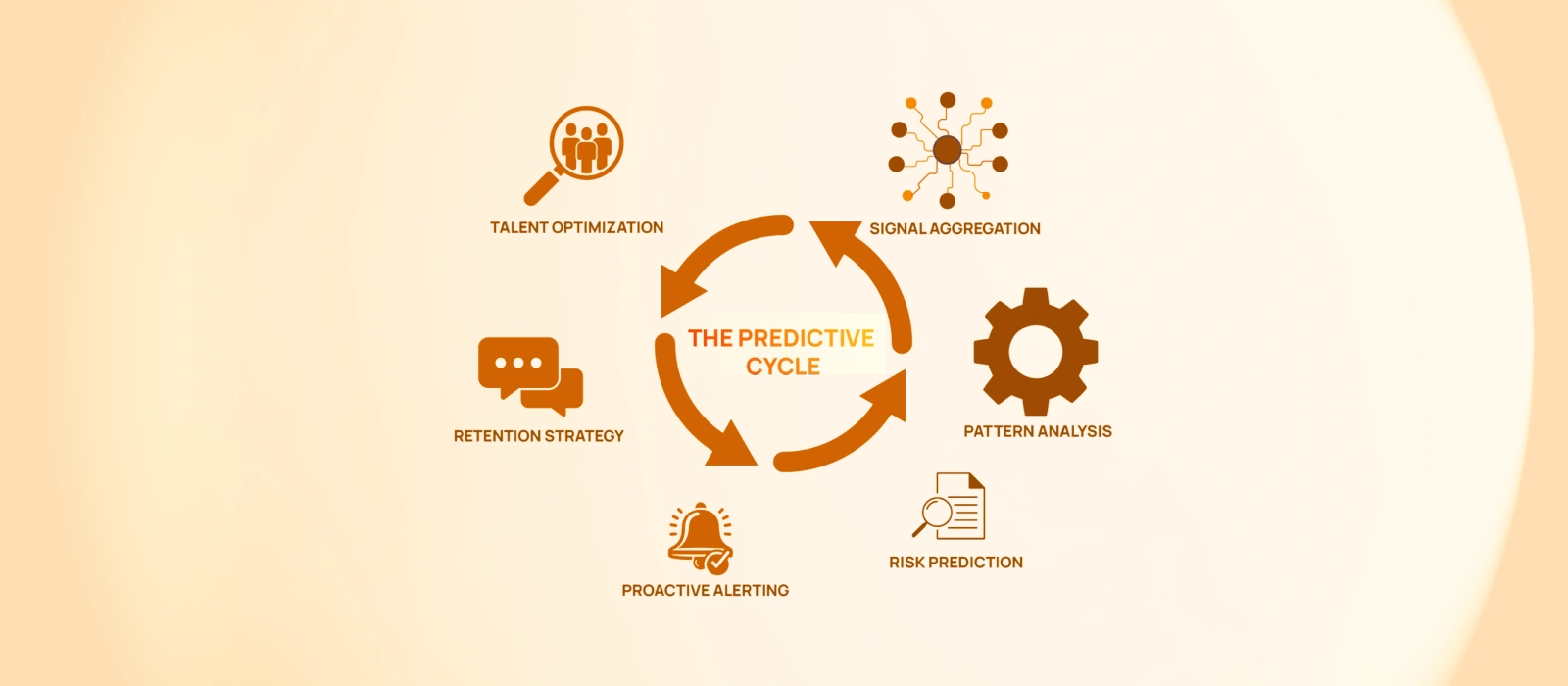
High-level intelligence is no longer restricted to corporations with massive data science budgets. Predictive analytics is now a standard requirement for proactive team management.
Identifying Attrition Risks Before They Surface
Analytics has moved from “what happened” to “what will happen.” Platforms now scan behavioral signals: like shifts in communication frequency or a dip in professional development: to flag burnout months before a resignation letter hits the desk. These systems provide a 90-day lead time. With accuracy hitting 87% or higher, HR can finally stop playing defense.
Turning Data into Conversations
The real value of analytics is prompting human intervention. When a system flags a top performer as a flight risk, it doesn’t just give a percentage; it gives a context-rich report. It might show the employee hasn’t had a career check-in for six months or that their workload is 20% higher than their peers. This facilitates “stay interviews” that are actually data-driven.
Trend 4: AI-Powered Continuous Learning and Upskilling at Scale
Skills now have a half-life of roughly 2 years. Projections show that 80% of the engineering workforce will need serious upskilling by 2027. Static annual training simply can’t keep up.
Learning in the Flow of Work
The AI trends in HR for 2026 indicate the end of the standalone Learning Management System. Learning is now a layer within Slack or Microsoft Teams. Modern platforms map skills gaps in real-time. If an employee struggles with a specific task, the system serves a “microlearning” module right then and there. It’s training delivered at the moment of need.
Contextual Coaching
Upskilling has moved into soft skills. If a manager is prepping for a difficult performance review, an AI agent can provide a coaching prompt moments before the meeting. It offers advice on tone or conflict resolution based on proven frameworks. This turns leadership development into a natural part of the day rather than a forced seminar.
Trend 5: Conversational AI and Self-Service Replacing Tier 1 HR
Service delivery is getting a long-overdue makeover. We are moving past clunky FAQs and toward actual, autonomous resolution.
24/7 Employee Support
Modern conversational platforms handle millions of interactions yearly. The shift from “helping” to “solving” is massive; current systems resolve over 90% of inquiries instantly. This clears the support ticket backlog, letting human HR staff handle the complex, sensitive casework that actually requires a person.
Meeting Employees Where They Are
2026 tools aren’t just keyword bots. They handle leave requests, policy queries, and onboarding logistics natively. They also understand their own limits. They escalate sensitive cases contextually, ensuring a seamless handoff to a human manager without the employee having to repeat their story.
Trend 6: AI Governance, Bias Auditing, and Compliance Becoming Mandatory
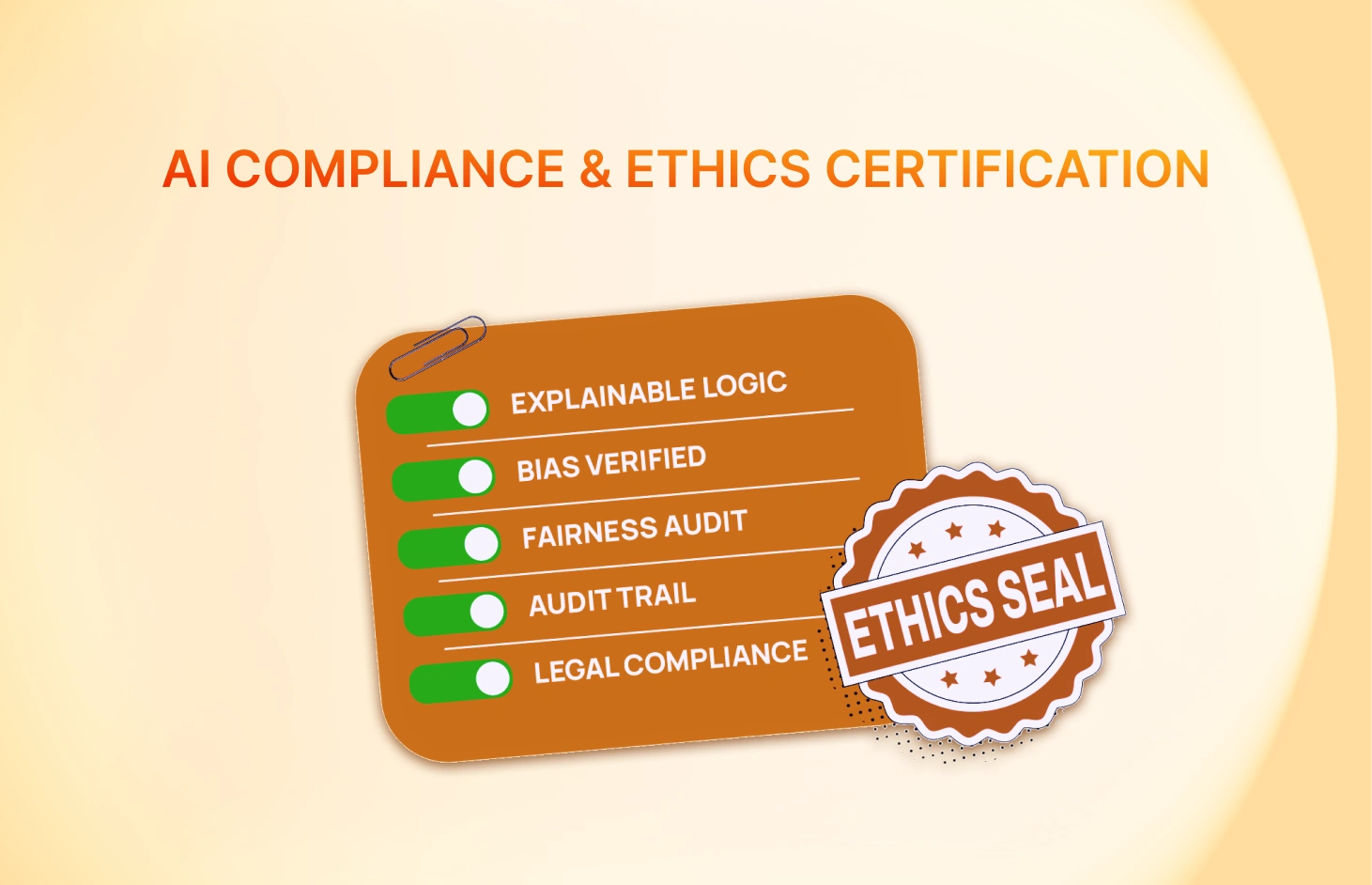
Accountability cannot be outsourced to a machine. Transparency is now a strict legal mandate for any system influencing high-stakes employment decisions.
Algorithmic Explainability Is the New Standard
Documentation is now a major legal hurdle. It isn’t enough to suggest a rejection; the system must explain the “why.” If a tool can’t provide a crystal-clear audit trail of which data points were used, the organization faces massive legal exposure. Governance is now about proving the math behind your talent decisions.
Bias Auditing: NYC Was Just the First Domino
Since NYC Local Law 144, bias auditing has become a global standard. New AI trends in HR include independent audits for “disparate impact.” Furthermore, 50% of organizations now require AI-free skills assessments. This protects the integrity of human critical thinking and helps verify what a candidate can do vs. what their AI did for them.
Trend 7: HR’s Strategic Repositioning: From Admin Function to AI Architect
The HR role is evolving 60% faster than the rest of the workforce. Leaders are having to master AI governance and human-machine workforce design almost overnight.
The Year of Workforce Redesign
2026 is the year of workforce redesign. Organizations are moving past adopting individual tools and are instead redesigning work itself. Roles are being broken down into tasks and re-bundled between human employees and digital agents.
From Process Manager to Architect
Your value no longer lies in managing a manual process. Instead, the modern HR professional is an architect of a hybrid ecosystem. Machines handle the heavy lifting while humans provide the strategic thinking. This repositions HR as the primary engineer of business resilience.
Risks We Must Not Ignore in 2026
Rushing into implementation without addressing structural threats is a recipe for budget disaster. You have to face these realities before committing your resources.
1. The AI ROI Gap: Vanity Over Value
Only 6% of organizations are getting meaningful value from their AI spend. Most fall into the “vanity tech” trap: buying tools that look great in a demo but solve zero real-world problems. Every tool must be mapped to a measurable outcome: hours saved or costs reduced.
2. The FOBO Crisis: Sabotage Through Insecurity
Fear of Becoming Obsolete (FOBO) is a quiet adoption killer. If employees feel their jobs are at risk, they will undermine or bypass the tools. Success requires psychological safety and a clear message: AI is here to remove the drudgery, not the human.
3. The Pipeline Erosion: Sacrificing Future Leaders
If we automate every entry-level role today, we kill the leadership pipeline for 2030. These roles are the “training gym” where future managers learn the basics. We can’t cut the bottom out of the pyramid just to hit an efficiency target this quarter.
Summary: Mapping the Path to 2030
The future isn’t about AI replacing HR; it’s about AI providing the infrastructure for HR to finally be the strategic partner it was meant to be. These AI trends in HR show that orchestration, prediction, and architecture are the new core competencies. The leaders acting now are the ones building the organizations of 2030. To ensure your team is ready, explore how the BlazeUp platform can transition you from administrative oversight to high-value AI architecture.
FAQs
The rise of autonomous superagents, skills-based hiring over resumes, and mandatory bias auditing laws.
 Jamie Ho
 Ami Tran